

Also Available On






Many families today are asking the same question: How can I be earning a decent income and still feel broke every month? The answer usually is not one single problem. It is a combination of high debt payments, expensive credit card balances, and rising mortgage costs that quietly eat away at income before people ever get a chance to save.
This financial squeeze is not just a personal issue. It is showing up across the economy. U.S. household debt recently reached $18.8 trillion, a record level, and credit card debt alone stood at $1.25 trillion in early2026, according to recent reporting. At the same time, mortgage affordability has worsened, with a typical family now spending 34% of income on a median-priced home, up from 32% in the prior quarter. For households earning about half the median income, that number jumps to 67%, which is far beyond a comfortable level.
That is why so many people feel trapped. They are not necessarily irresponsible. They are living inside a system where borrowing is more expensive, housing costs more, and everyday expenses keep rising.
Why so many families feel “broke” even when they are earning
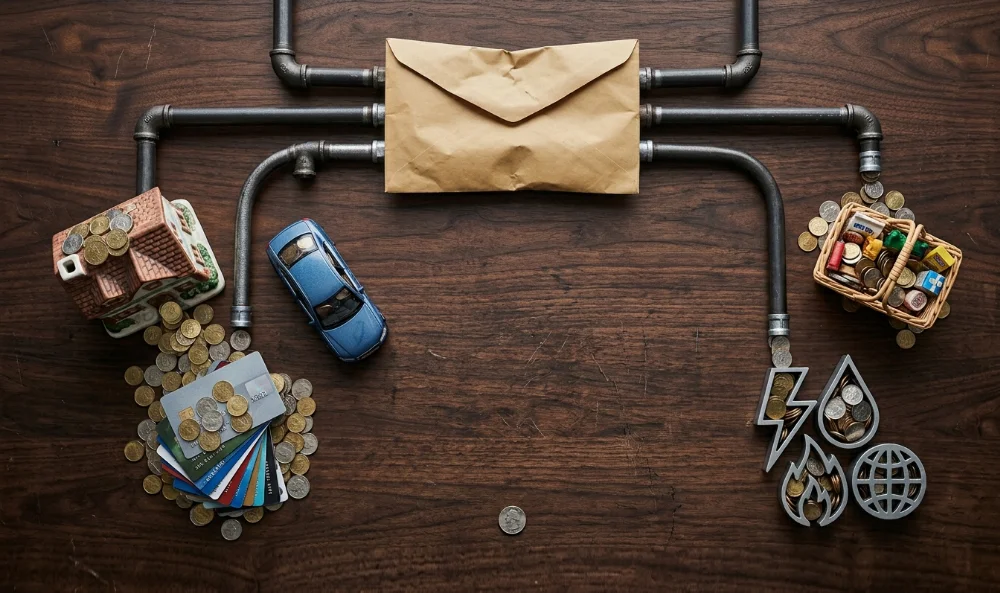
In the past, a steady paycheck could cover housing, transportation, food, and a little savings. Today, many families are using most of their income just to stay current on debt and housing payments.
A simple example makes this easier to understand. Imagine a household earns $6,000 a month after taxes. That sounds healthy. But then the bills arrive:
- $2,000 for rent or mortgage
- $700 for car payment and insurance
- $500 for credit card minimums
- $600 for groceries
- $250 for utilities and internet
- $300 for gas and commuting
- $400 for childcare or family support
- $250 for subscriptions, phone bills, and random expenses
That already totals $5,000, before emergencies, savings, or fun. So even with a good income, there is very little left. This is what “earning well but still broke” really means: income is coming in, but debt and fixed costs are taking most of it back out.
Credit card debt is one of the biggest money leaks

Credit cards are one of the fastest ways for households to fall behind because the interest is expensive and the balances are easy to underestimate.
In early2026, American households held $1.25 trillion in credit card debt, which was $70 billion higher than the year before. The delinquency rate was around 3%, still above pre-pandemic levels. That tells us many families are not just using cards for convenience. They are carrying balances month after month and struggling to keep up.
Here is what happens in daily life:
A family uses a credit card for groceries, school supplies, gas, and repairs because cash flow is tight. At first, it feels manageable. But then one emergency hits: a tire blows out, the water heater fails, or a medical bill arrives. The card balance grows. Minimum payments go up slowly, but the interest compounds. Suddenly, a few hundred dollars of emergency spending becomes a balance that takes years to pay off.
That is why credit card debt is so damaging. It does not just create stress today. It reduces your ability to save tomorrow.
Mortgages are squeezing homeowners too

Many people assume owning a home means financial stability. But in today’s market, a mortgage can be a major source of pressure.
Recent reporting shows that housing affordability worsened for the first time in nearly three years. A median-priced home around $410,700 now requires monthly payments equal to 34% of a typical family’s income, up from 32% earlier in the year. Mortgage rates have also remained elevated, around 6.8% in recent coverage, which makes borrowing far more expensive than many buyers expected.
For lower-income households, the burden is even worse. Families earning half of median income would need to spend 67% of earnings just to cover a new-home mortgage payment.
A real-world example:
A couple buys a home when rates are high because they are tired of renting. Their mortgage payment is technically affordable at closing, but then insurance rises, property taxes increase, repairs appear, and their monthly housing cost becomes much larger than planned. They are not “bad with money.” They are under pressure from fixed costs that are hard to escape.
This is one reason many middle-income families feel stuck. They own a home, but the mortgage leaves little room for saving, investing, or even normal life expenses.
Why debt feels worse now than before

There are several reasons the pressure feels so intense right now:
- Borrowing is more expensive. Higher interest rates make mortgages, credit cards, and other loans cost more.
- Housing is less affordable. Home prices and monthly payments remain high.
- Household debt is at record levels. More families are already carrying balances before new expenses arrive.
- Emergency costs hit harder. One unexpected bill can push a household into revolving debt.
- Income often does not rise fast enough. Many wages have not kept up with the combined pressure of housing, food, and debt payments.
This creates a trap: people earn more, but they do not feel richer because fixed obligations rise even faster.
The emotional cost is real too

Debt is not only a financial problem. It also affects stress, sleep, relationships, and decision-making.
A person who is constantly juggling payments may start doing things like:
- delaying medical appointments
- avoiding phone calls from creditors
- using one credit card to pay another
- skipping savings entirely
- feeling ashamed even when the problem is common
That stress can make people feel isolated, but they are not alone. Across the country, many households are dealing with the same squeeze on every front.
What actually works: practical solutions

The good news is that people can regain control. The key is to stop treating debt as one giant problem and break it into manageable steps.
1. Know your monthly “survival number”
I recommend starting with the amount you need for essentials:
- housing
- food
- transportation
- utilities
- minimum debt payments
- basic insurance
This gives you a clear picture of the minimum income needed to stay afloat. Once you know that number, you can see where your money is leaking.
2. Stop adding new debt where possible
If credit card balances are growing, the first goal is to prevent them from increasing. That may mean:
- pausing unnecessary spending
- using debit instead of credit
- canceling unused subscriptions
- creating a weekly grocery limit
- avoiding buy-now-pay-later purchases
Think of this like turning off a leaking faucet before mopping the floor.
3. Use a repayment strategy
Two common approaches are:
- Debt snowball: pay off the smallest balance first for momentum
- Debt avalanche: pay off the highest-interest debt first to save more money
If you need motivation, snowball can help. If you want the lowest cost, avalanche usually wins.
4. Look into balance transfers or consolidation carefully
A balance transfer can help if you qualify for a lower introductory rate. A consolidation loan can help if the new rate is lower than your current credit cards.
But these are tools, not magic. They only help if you stop adding new debt and keep making payments on time.
5. Review housing costs
If mortgage or rent is taking too much of your income, look at ways to reduce pressure:
- refinance only if the numbers truly improve
- request property tax or insurance reviews if appropriate
- consider a roommate or rental income if possible
- downsize if the housing payment is unsustainable
Housing is often the biggest fixed expense, so even a small change can free up cash.
6. Build a starter emergency fund
Even $500 to $1,000 can prevent a small emergency from turning into a credit card crisis. Once debt is under control, build toward 3 to6 months of essential expenses.
Where to get help right now

If you or your readers are dealing with debt pressure, these are useful starting points:
- National Foundation for Credit Counseling (NFCC)
Website: nfcc.org
Phone: 1-800-388-2227 - Consumer Financial Protection Bureau (CFPB)
Website: consumerfinance.gov
They offer tools and guidance for credit cards, mortgages, and debt complaints. - U.S. Department of Housing and Urban Development (HUD) housing counseling
Website: hud.gov
Phone: 1-800-569-4287
This is especially useful for mortgage questions and foreclosure prevention. - 211
Website: 211.org
In many areas, dialing 211 connects people to local financial, housing, and emergency resources. - Lifeline for crisis support if stress feels overwhelming
Phone: 988
Website: 988lifeline.org
If someone is behind on a mortgage or worried about foreclosure, speaking to a HUD-approved housing counselor early is often better than waiting. If credit card debt feels unmanageable, a nonprofit credit counselor can help create a repayment plan.
A realistic plan for the next30 days

Here is the simplest version of a reset plan:
- Write down all income and all monthly bills.
- Separate fixed bills from flexible spending.
- List every debt balance, interest rate, and minimum payment.
- Choose one repayment method.
- Cut one unnecessary expense this week.
- Set up an automatic transfer, even if it is only $25 or $50.
- Call one support organization if you are behind.
The goal is not perfection. The goal is momentum.
Final thought

When people say they are “earning well but still broke,” they are usually describing a real structural problem, not a character flaw. Record household debt, expensive credit cards, and costly mortgages are making it harder for families to breathe financially.
The way out starts with clarity: know where your money is going, stop the debt from growing, and build a small plan you can actually follow. Even in a difficult economy, progress is possible one payment, one cut, and one habit at a time.
About The Author / Blogger

Axon Sage
Axon Sage is a seasoned financial expert dedicated to simplifying debt elimination. With years of experience in personal finance, he transforms complex financial concepts into actionable strategies anyone can follow. His engaging writing style and practical approach have helped thousands break free from debt and build lasting financial stability. Trust Axon to guide your journey to financial independence.
Share This Story, Choose Your Platform!
Related Posts



LISTEN NOW

CAPTIVATING READS
Our blog is packed with articles and stories based around Debt Free, Investment, Wealth and Income Opportunity categories. Subscribe now to get all of our updates directly to your inbox every week.